

The Learning Zone
Practical design, formatting, and editorial guidance for authors and publishers bringing a book to print.
How to Work With an Editor and a Formatter as Two Separate Vendors
Hiring an editor and a formatter as two separate vendors works — until the author becomes the only line between them. Here’s how to structure that handoff so nothing gets lost.
How to Handle Author Revisions After Formatting Has Already Started
A late revision request rarely sounds like a big deal — until it’s already inside a laid-out file. Here’s why small changes ripple, and what a real verification pass actually checks.
How to Move an Edited Word Manuscript Into a Print-Ready Formatted File
A clean edit doesn’t automatically survive the move into layout. Here’s the actual process that keeps an edited manuscript from picking up new errors on its way to a print-ready file.
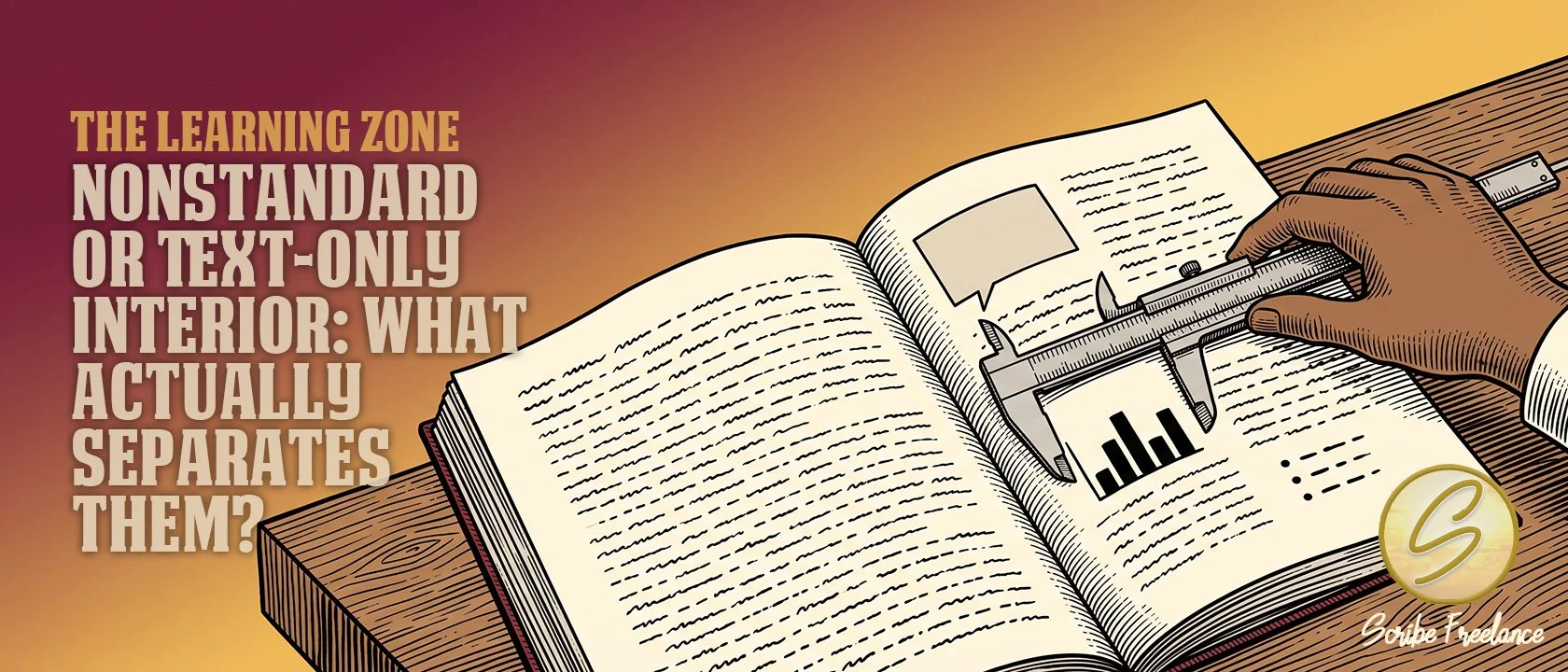
Nonstandard or Text-Only Interior: What Actually Separates Them?
Nonstandard and Text-Only interiors aren’t sorted by genre or length — they’re sorted by how many separate design decisions each page has to hold. Here’s the real dividing line, and what the price difference actually buys.
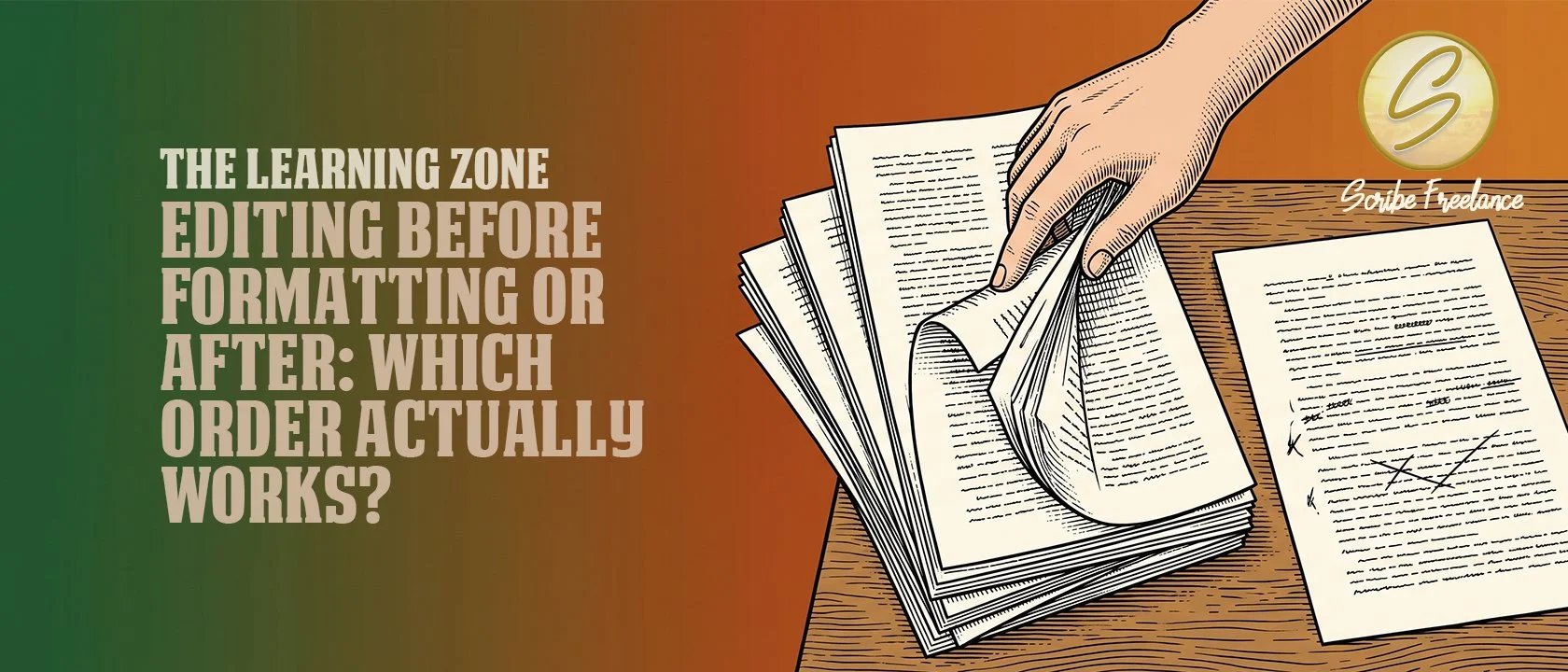
Editing Before Formatting or After: Which Order Actually Works?
Formatting before editing feels productive, but it usually means paying for layout twice. Here’s why the order matters, what reflow actually breaks, and the one edit that’s fine to run after formatting.
Why Did My Formatted Book Come Back With So Many Typos an Editor Missed?
A formatted book surfacing typos an editor missed usually means the file that reached layout wasn’t the final accepted version, not that editing failed. Here’s why a proofread after formatting still matters.
Why Do Ghostwritten Manuscripts Stumble at the Formatting Handoff?
A ghostwritten manuscript can read true to the author’s voice and still stumble at the formatting handoff, because structure, subject, and consistency get tested for the first time at layout, not before.
Why Did IngramSpark Reject My File?
IngramSpark and Lightning Source rejections almost always trace back to one of five issues: file size, embedded fonts, PDF/X compliance, image resolution, or a cover-to-interior mismatch. Here’s how to diagnose which one, fast.