
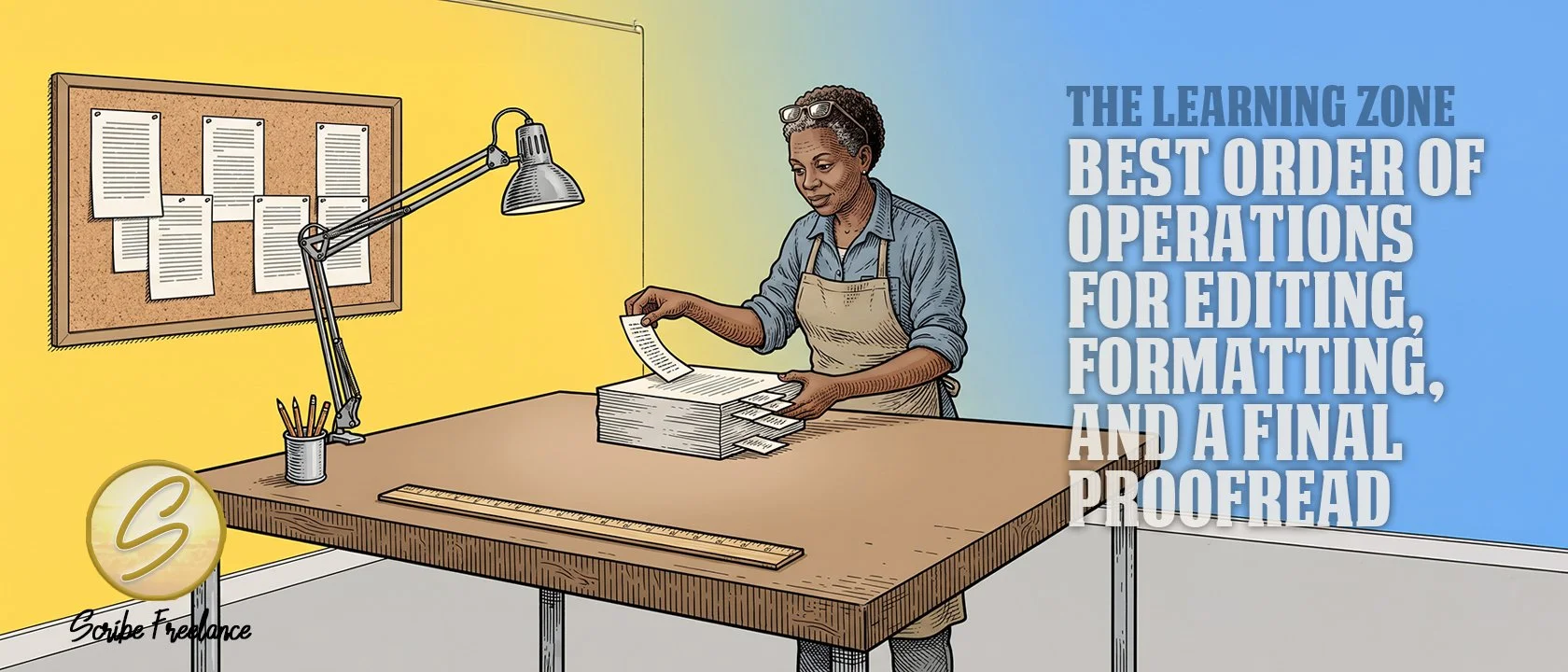
Best Order of Operations for Editing, Formatting, and a Final Proofread
A manuscript can look ready and still be carrying a few unsettled edits. The order only works once someone has confirmed that the first step is really done.
The editing, formatting, and proofreading order that holds up is substantive editing first, formatting second, and a final proofread last. Each step only works if the step before it really is finished, which isn’t always the same as looking finished.
I’m Daniel J. Middleton, and over two decades of formatting rejected files, editing manuscripts, and building book interiors from scratch has taught me where the real problems hide.
This piece lays out the three steps in order, then walks through a real project where a manuscript went into layout looking locked and wasn’t.
What Is the Best Order for Editing, Formatting, and a Final Proofread?
Three steps, and each one has a job the others can’t do:
Substantive editing, finished first. Copy editing, comprehensive editing, or a rewrite, whichever tier the manuscript needs, with every change decided before layout begins.
Formatting, built around settled text. The interior gets laid out once, against words that aren’t expected to move.
A final proofread, last. A light pass over the formatted pages for typos, punctuation slips, and small mechanical errors.
Why editing has to come before layout comes down to reflow: a substantive change after layout shifts pages and breaks anything tied to a page number. A proofread doesn’t do that, which is why it’s the one step that belongs after formatting.
The order is easy to state. Where it goes wrong in production is the first step, because “finished” is easy to claim and harder to confirm.
Why Does a Final Proofread Still Matter After a Clean Edit and a Careful Layout?
Because it’s the only step that reads the pages the way a reader will see them. A typo that hides in a Word file’s flow can stand out on a finished page, so layout is often the first time some problems become visible at all.
That holds even when a manuscript is supposed to be vetted. A final proofread still matters on a file that’s already been edited, and it stays light only when the substantive decisions were really made upstream.
What Happened When a Manuscript That Looked Locked Went Into Layout?
A publisher I work with sent over a layout on a book from an editor whose work usually arrives fully polished. This time, a few stray, unaccepted track changes were still sitting in the file.
I flagged them and got the okay to accept them and start layout. It seemed like a small, reasonable call at the time, and with this editor’s track record, nobody had a reason to expect more.
The layout went to my team that handles overflow projects, and the proof went out to the author for review.
The author came back with a flurry of complaints: style edits that had gone missing, and a host of other issues my team hadn’t caught on the first pass.
Resolving it fell outside the original project scope, so it became an add-on service.
The publisher is now managing an author who’s trying to pull the manuscript back together, alone or with outside help, and who understandably trusts the process less than before.
The detail worth keeping is how small the warning looked. A few unaccepted changes read as housekeeping. They can also be the only visible sign that an edit pass wasn’t fully closed out, and nothing in the file says which.
A manuscript is ready for layout when someone with authority over the edit confirms every change has been settled, not when the file seems tidy.
What Should You Confirm Before a Manuscript Goes Into Layout?
Three checks before layout starts:
No markup left in the file. Switch Word to All Markup and open the Reviewing Pane, which lists every tracked change and comment still in the document. A handful is a reason to stop and ask, not to click Accept All.
Confirmation that the whole file is final. An okay to accept a few changes isn’t the same as confirmation that everything else is done. Ask the editor to confirm that the version you’re holding is the finished one.
The author’s own review of the edits. If the author expects certain style edits to appear, check that they’re in the file before layout starts, not after the proof comes back.
The next decision isn’t which step to rush. It’s who confirms that the edit is finished, and when. Settle that before layout is scheduled, not after the proof comes back.
If you’re lining up all three steps, my current service rates list editing, formatting, and proofreading together, so you can plan the order and the cost at the same time.