
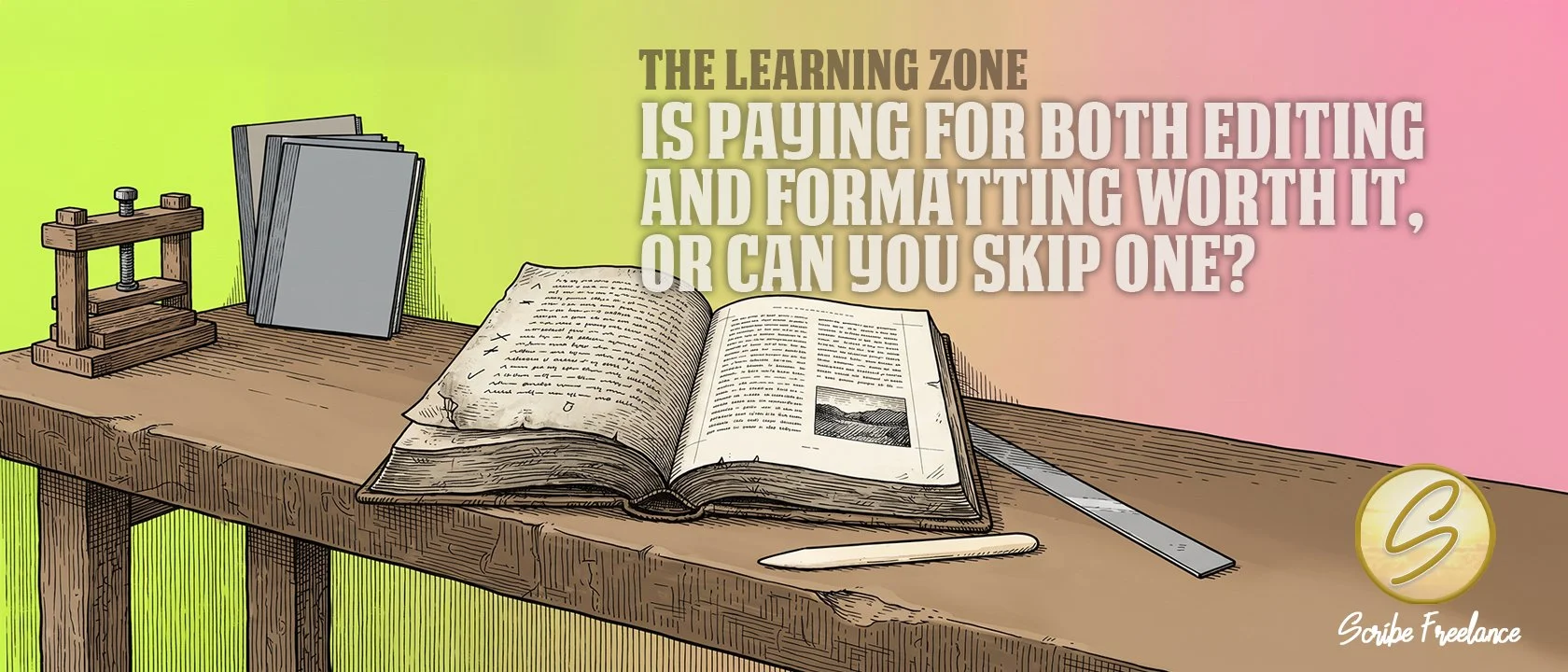
Is Paying for Both Editing and Formatting Worth It, or Can You Skip One?
When money is tight, one service starts to look optional. The book disagrees, because every page has to do both jobs at once.
On a tight budget, skipping either editing or formatting can look like a sensible cut. For most books, paying for both is still worth it, because each one covers a risk the other can’t.
I’m Daniel J. Middleton — Scribe Freelance exists because over two decades of book design and editing work showed me how often good manuscripts get held up by process, not by the writing itself.
This piece covers what a book risks when it gets editing without formatting, or formatting without editing, and what buying both together looked like on a real project.
Why Does Skipping Either Editing or Formatting Look Like a Reasonable Budget Cut?
Whichever one you’ve already paid for makes the other look optional. A carefully edited manuscript already reads clean, so a professional layout feels like decoration. A well-formatted file already looks like a book, so an edit feels like polish.
Both instincts are understandable. Both also treat the missing service as a finishing touch, when it’s covering a different risk entirely.
What Do Editing and Formatting Each Protect Against That the Other Can’t?
Each one guards a different point in a book’s path to the reader:
Editing protects the words. Typos, inconsistencies, unclear passages, and structural problems all live in the text itself. A polished layout carries every one of them to the page exactly as written.
Formatting protects how the words are received. Margins, type, spacing, page flow, and front and back matter decide whether a book looks finished before anyone reads a sentence. A clean edit sitting in a plain default layout can still read as unfinished.
That’s also why a clean edit doesn’t make a file print-ready: the words can be sound while the pages around them still have checks left to pass.
What Did Buying Editing and Formatting Together Look Like on a Real Memoir Project?
On one memoir project, the quote for editing and layout of the book’s bonus content came as a single number, images included. It was approved at $1,385.
That figure is what the project was quoted at the time, under my earlier rate structure, so treat it as an example of how the decision looked, not as current pricing. My current service rates show what editing and formatting cost today.
That project had a single quote and a single approval covering both services. At no point was one already paid for while the other waited to look optional.
One project doesn’t prove that a combined quote costs less than two separate ones, and I won’t claim it does. It shows what buying the two together removes: the moment where a budget cut gets made one service at a time.
A reader meets the sentences and the page at the same moment, so a book is only as ready as whichever of the two went unpaid for.
Is It Worth Paying for Editing and Formatting Together When the Budget Is Tight?
Yes, if you plan for both from the start and then adjust the level of each instead of removing one. A lighter editing tier or a simpler interior tier lowers the total without leaving either risk uncovered.
On the editing side, knowing which level your manuscript needs is the place to start.
Then ask for one combined quote covering both, so neither shows up later as a separate surprise.
Neither one guarantees sales. Together, they just keep the book from handing a reader an early reason to doubt it.
The next decision isn’t which one to skip. It’s what each costs at the level your manuscript actually needs. To compare the two, my current service rates show editing and formatting prices together, so you can weigh them before cutting either.