
Copy Editing vs. Comprehensive Editing: Where’s the Line?
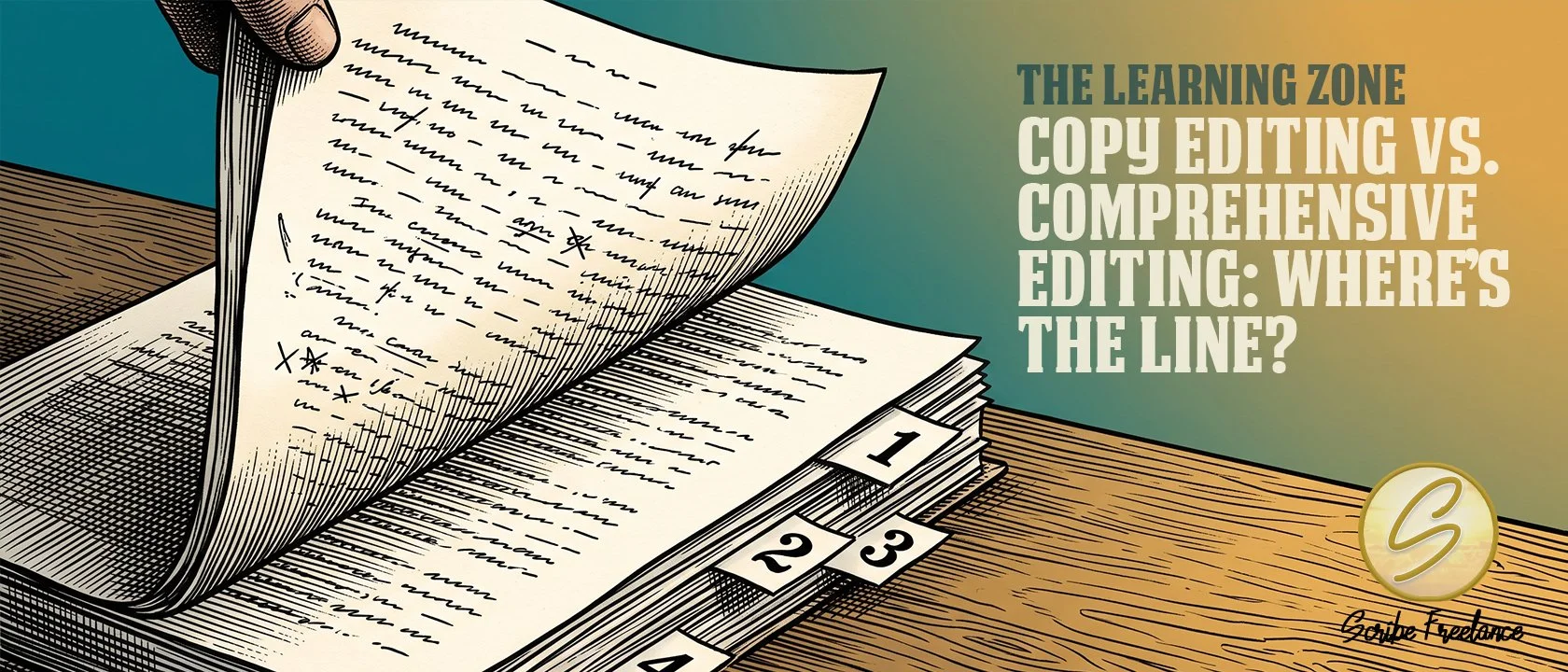
A sentence-level polish sits on top. The real question is what’s holding the structure underneath it together.
Copy editing and comprehensive editing sound like two prices for the same service, with one being just a little more thorough than the other. They’re not — the real difference is what each one is allowed to touch, not how hard the editor works. Getting that wrong is how a manuscript ends up paying for editing twice.
My name is Daniel J. Middleton, and for over two decades I’ve helped indie authors and small presses turn raw manuscripts into finished books they’re genuinely pleased to stand behind.
This article draws the real, checkable line between copy editing and comprehensive editing, so the right tier gets ordered the first time.
Why Do Copy Editing and Comprehensive Editing Get Confused?
Both tiers touch sentences. Both come back with a marked-up manuscript and a list of changes. From the outside, comprehensive editing just looks like copy editing with a bigger invoice attached.
The actual difference is scope, not effort. Copy editing assumes the manuscript’s structure and organization are already sound and works within that frame. Comprehensive editing doesn’t make that assumption — it’s scoped to ask whether the frame itself is right before it worries about the sentences sitting inside it.
What Does Copy Editing Actually Reach?
Copy editing covers everything a proofread covers, then goes a layer deeper: grammar, style, consistency, and word usage, plus refining phrasing and sentence structure where it’s genuinely uneven. It’s sentence-level work.
That’s the boundary. A copyedit can smooth a clunky sentence, fix an inconsistent verb tense, tighten a rambling paragraph. What it isn’t scoped to do is step back and ask whether that paragraph is in the right chapter, or whether the argument two chapters over actually holds together. The manuscript’s bones are treated as already set.
What Does Comprehensive Editing Add?
Comprehensive editing includes both proofreading and copy editing, then adds the structural layer neither one touches: reworking sentences and passages for clarity and flow, addressing organizational issues, and improving overall readability across the whole manuscript, not just within individual passages.
Copy editing fixes how sentences are written. Comprehensive editing also asks whether the material is organized the way it should be.
That’s pacing, section order, and whether a narrative or argument actually tracks from the first page to the last — not something any amount of sentence-level polish can fix, because it was never the kind of problem sentence-level polish was aimed at.
What Kind of Feedback Signals Whether You Need Copy Editing or Comprehensive Editing?
The honest test isn’t how finished the manuscript feels. It’s the kind of notes it’s already getting from readers.
More than once, a manuscript has come back from copy editing reading better sentence by sentence, and the reader still can’t follow the throughline (the thread that carries the story or argument from the first page to the last) — not because the copyedit failed, but because tracking the throughline was never in scope for that tier to begin with.
If the feedback you’re hearing is about individual sentences and word choices — something reads awkwardly, a term gets used inconsistently — that’s copyedit territory. If the feedback is about confusion over where the story or argument is going, pacing that drags or rushes, or pieces that don’t seem to fit together, comprehensive editing is the tier that’s actually scoped to touch it.
What Happens If You Order Copy Editing on a Manuscript That Needs More?
The sentence-level polish holds. That part of the work is real and doesn’t go away. But the structural problems underneath it are still there — and now they’re wrapped in cleaner prose, which makes them easier to overlook on a quick pass and harder to explain to a reader who can feel that something’s off without being able to name it.
A second, comprehensive pass often becomes the actual next step. That’s a cost that gets avoided entirely by ordering the right tier the first time, not by catching the problem later. If you want to see why that second pass costs what it does, why comprehensive editing costs more than copy editing breaks down where the extra hours go.
What Should You Check Before You Book Copy Editing or Comprehensive Editing?
Pull the most recent feedback on your manuscript — beta reader notes, a critique partner, your own honest reread — and sort it against the two signals above: sentence-and-word-level notes point to copy editing, notes about structure, pacing, or throughline point to comprehensive editing.
If you’re not sure your manuscript is past proofreading-level work in the first place, proofreading vs. copy editing covers that earlier boundary directly, and how to choose the right editing level walks through all four tiers at once if the confusion goes wider than these two. And if the problems you’re seeing go past structure, comprehensive editing vs. rewriting covers the next rung up.
That sort takes a few minutes and it’s the difference between paying for the right depth of attention once and paying for two passes because the first one was never going to reach the actual problem.
If you want to see where your manuscript’s word count lands against real pricing for either tier, the service rates page breaks both down directly.