

Comprehensive Editing vs. Rewriting: How Much Should an Editor Actually Change?
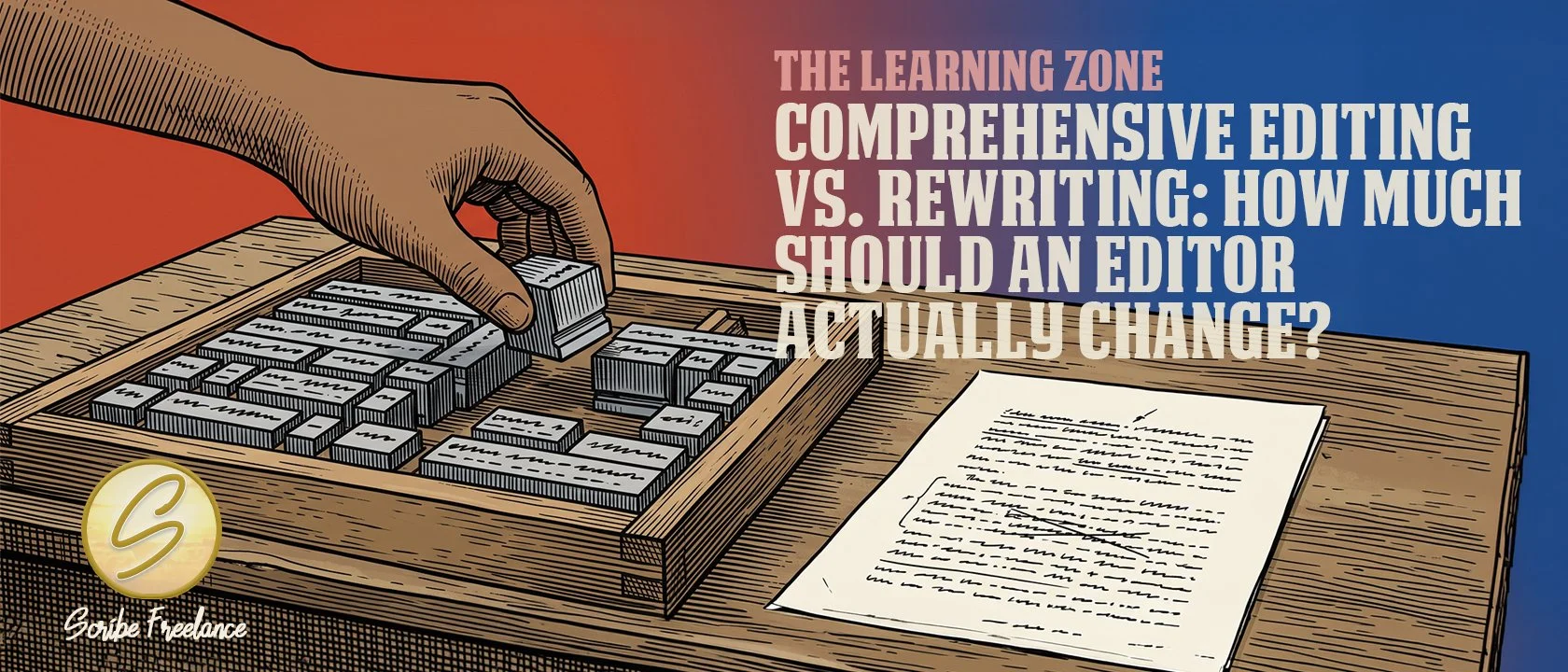
A marked-up page is still the same book, better said. A reset composing frame is the same book, told differently.
Comprehensive editing changes how a manuscript is written. Rewriting changes what it’s built to say and how it says it — that’s the real boundary between the two heaviest tiers on the editing ladder. The word “rewriting” still stops most authors before they get that far, because it sounds like someone else’s voice replacing theirs.
I’m Daniel J. Middleton, and over two decades of formatting rejected files, editing manuscripts, and building book interiors from scratch has taught me where the real problems hide.
This article draws that line, and settles what “preserving your voice” actually means once a manuscript needs full reshaping, not just stronger sentences.
Why Do Comprehensive Editing and Rewriting Get Confused?
Both tiers come back with a heavily marked-up manuscript. Both cost more than the lighter tiers underneath them. From a distance, rewriting just looks like comprehensive editing that went further.
It isn’t further — it’s different in kind. Comprehensive editing can move a paragraph, tighten a chapter, fix pacing that drags. What it won’t do is decide the material needs a different structure altogether, or that an idea needs to be told a different way to actually land. That’s the boundary that belongs to rewriting, not comprehensive editing.
What Does Comprehensive Editing Actually Reach?
Comprehensive editing includes both proofreading and copy editing, then adds a structural layer: reworking sentences and passages for clarity and flow, addressing organizational issues, and improving overall readability across the whole manuscript. It’s the tier that steps back far enough to notice pacing problems and section-order issues, not just uneven paragraphs.
That’s still intervention on execution. The content and ideas remain the author’s. What comprehensive editing changes is how well those ideas are expressed and arranged — not what they are.
What Does Rewriting Add That Comprehensive Editing Doesn’t?
Rewriting is meant for manuscripts that need extensive revision — it reshapes ideas into more polished, engaging prose, aiming to improve overall quality and readability. That word “reshapes” is the tell. Comprehensive editing organizes what’s already there. Rewriting exists to change the presentation of the material itself, not just tighten it.
The self-check that separates the two: is the feedback about how the manuscript is written, or about what it actually is — the story or argument needing a different shape than the one it currently has? The former is comprehensive editing. The latter is rewriting territory.
What Does the Price Jump From Comprehensive Editing to Rewriting Actually Tell You?
Copy editing to comprehensive editing is a modest step — roughly $7.75 to $11.00 per 250 words. Comprehensive editing to rewriting is a much bigger one: $11.00 up to $30.00 per 250 words, close to three times the rate. That gap by itself says something worth paying attention to. Rewriting isn’t comprehensive editing with a little extra polish tacked on — it’s a categorically different scope of work, priced like one.
Does Rewriting Mean Losing Your Voice?
This is the actual fear behind the hesitation, and it doesn’t hold up against what the tier actually does. Rewriting is built to preserve the author’s unique voice while enhancing the message — turning ideas into a more compelling narrative, not replacing them with someone else’s. Voice preservation isn’t a promise unique to the lighter tiers. It’s stated at every level, including the heaviest one.
More than once, a manuscript has come in for comprehensive editing when the real issue was the ideas needing reshaping, not better sentences. Every time, the same concern stalled the decision: would the author still recognize the book on the other side? The answer sits in the scope itself, not in how deep the edit runs.
Rewriting costs more because it reaches further, not because someone else takes over the book.
What Kind of Feedback Signals You Need Rewriting Instead of Comprehensive Editing?
Notes about sentences, word choices, or a section that drags are comprehensive editing feedback — execution-level notes about a shape that’s already right. Notes that keep circling back to confusion about what the book is actually trying to be are a different signal. So is material that keeps fighting its own structure no matter how many passes it gets. That’s rewriting territory, and comprehensive editing isn’t built to reach it.
What Should You Check Before You Book Comprehensive Editing or Rewriting?
Pull the most recent feedback on the manuscript and sort it against that split. Notes about sentences and flow point to comprehensive editing. Notes about the material itself needing a different shape point to rewriting. If the confusion starts further back — whether the manuscript is even past proofreading-level work yet — how to choose the right editing level walks through all four tiers at once, and copy editing vs. comprehensive editing covers the rung just below this one.
Getting this right the first time means the manuscript gets reshaped once, by someone able to actually touch the problem — not polished twice because the first pass was never going to reach it. If you want to see where your manuscript’s word count lands against real pricing for either tier, the service rates page breaks both down directly.