
Why Don’t Hybrid-Published Authors Always Own Their Book’s Files?
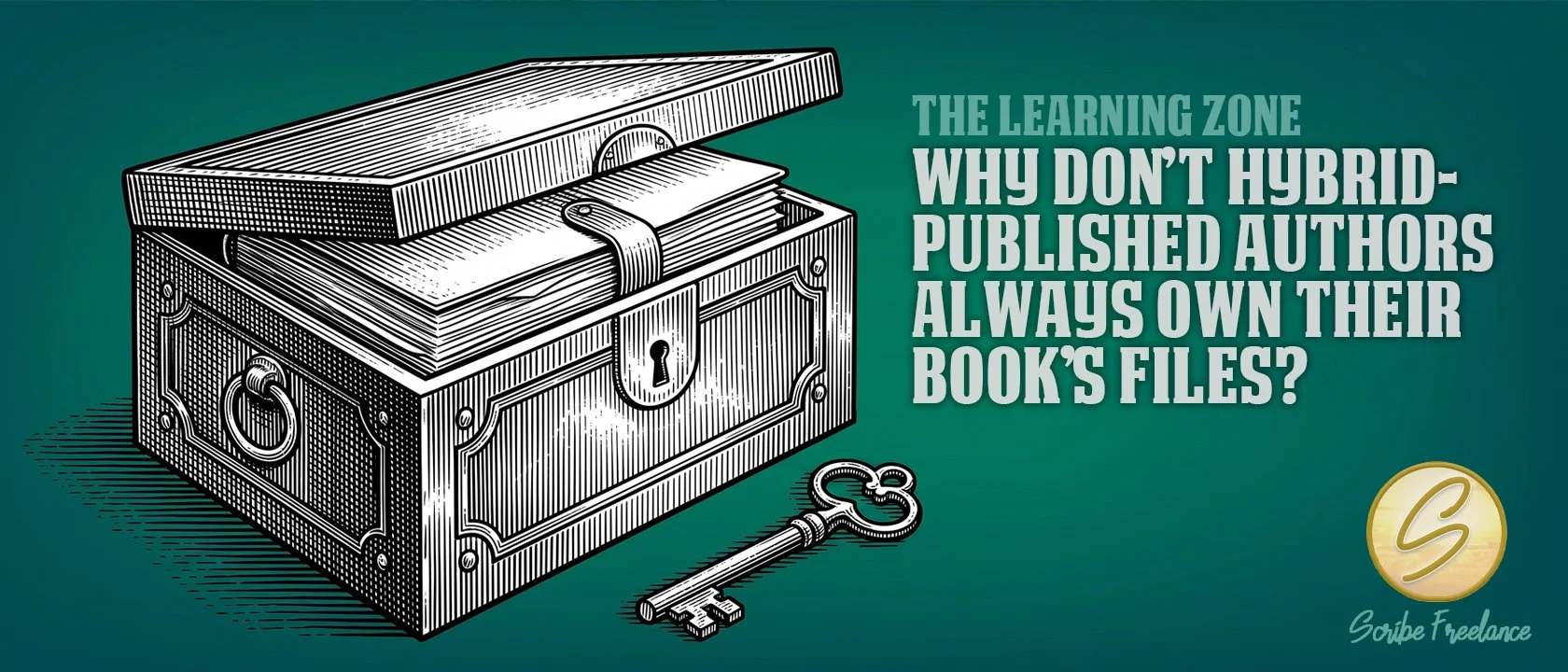
Copyright says the words are yours. The files are a separate lock, and not every publisher hands over the key.
Owning the copyright to your book and owning the files that make it reproducible aren’t the same thing, and a hybrid publishing contract can guarantee one without ever mentioning the other. Most authors don’t find out until they try to switch printers, order a new edition, or move to wider distribution and discover they don’t actually have what they need to do it.
I’m Daniel J. Middleton, and I’ve spent about two decades designing books for authors and publishers. A client of mine wanted to migrate a title away from Lightning Source and asked for their files. What came back was a finished PDF — not the editable source files. Because a PDF isn’t truly editable, no clean paragraph reflow, no real restructuring, the “migration” turned into a full rebuild from scratch.
This article covers the difference between owning your copyright and owning your production files, the specific ways file ownership breaks down after hybrid publishing, and what reasonable file-delivery terms actually look like, so you know what to ask for before you sign anything, not after.
What Does “Hybrid Publishing File Ownership” Actually Mean?
Copyright and file custody are two separate questions. Copyright is about who legally owns the words. File custody is about who physically holds the editable files that make the book reproducible, the source design file, the linked fonts and images, the editable cover file, not just a finished output.
Owning the copyright to your book and owning the files that make it reproducible are two different kinds of ownership, and a hybrid publishing contract can promise one without ever mentioning the other.
Hybrid contracts tend to spend their language on copyright and royalties, because that’s the part authors ask about. File custody rarely comes up, because “hybrid” sounds like a partnership, and it’s easy to assume “your book” means “your files.” Sometimes it does. Sometimes it doesn’t, and there’s no way to tell from the outside until you actually ask for the files.
What Counts as “the Files,” Specifically?
Two categories matter here, and they’re not interchangeable.
Editable source files are the working files: the native design file with fonts and linked images still attached, and an editable cover file. These are what let you actually change something, fix an error, update a bio, swap a photo, redesign for a new trim size.
Finished output files are the end product: a print-ready PDF, an EPUB. These are what a printer or retailer needs to produce or sell the book as it currently exists. They’re not built to be opened and edited.
The Lightning Source migration case above is the cleanest illustration. Having a PDF of your own book feels like having your book. It only actually works as a migration if you intend to republish the book almost untouched. The moment you want to change anything, real content, a chapter reorder, a new edition, a PDF-only handoff stops being a handoff and becomes a new project wearing the old book’s clothes.
What Are the Different Ways File Ownership Actually Breaks Down?
It’s not just one failure mode. I’ve run into several, and they’re worth knowing apart because they call for different questions before signing:
PDF-only handoff. You get a finished file, not a working one. Functional for reprinting as-is. Not functional for anything else.
Stripped branding or IP. A former publisher’s logo or design elements have to be removed before the files can be reused, because those elements were never yours to keep, even though the pages around them are.
Licensed fonts that don’t transfer. The book’s typeface was licensed to the publisher, not the author. The visual design is effectively owned by someone else, even though you own the words inside it.
No one left to ask. The press has gone defunct or delinquent. There’s no request to make, because there’s no one on the other end. Images and layout have to be rebuilt from nothing but the surviving text.
Any one of these can sit invisible for years, because most authors never test whether they actually have what they need until they try to use it.
What Should Reasonable File Ownership Terms Actually Look Like?
This is a fair thing to ask for and expect in writing before signing with anyone. My own client agreement is a useful benchmark: once someone works with Scribe Freelance, they own all intellectual property my team creates, full stop, no rights retained on my end. Files stay archived for five years, and updates during that window are still honored at cost.
That’s not an unusual standard to hold a publisher to. It’s the kind of term you should be able to name and confirm before you sign, rather than assume is true because the contract talks about copyright.
A quick, practical version of what to ask before signing:
Will I receive the editable source files, not just a finished PDF or EPUB?
Do the fonts used in my book transfer to me, or are they licensed to the publisher only?
If the publisher folds, is there any file-delivery provision that survives that?
What If the Files Are Already Gone?
If you’re past the point of negotiating and the files genuinely don’t exist anymore, that’s not automatically a dead end. As long as the underlying text survived, a rebuild from scratch is a real option, and it’s sometimes an upgrade rather than a downgrade, since a rebuild is a natural point to fix design choices that had already gone stale anyway.
That’s a bigger topic than fits here, worth its own article down the road.
One more note before you go looking at your own contract: this isn’t legal advice, and it shouldn’t stand in for it. What I know is production, what files a book actually needs to be reproducible, not contract law. If you’re evaluating a real agreement, that’s a conversation for an attorney or a service like the Authors Guild’s contract review, not a blog article.
If you’re about to sign with a hybrid press, the file-delivery question belongs on the same list as the royalty and rights questions, not an afterthought you circle back to later. And if you’ve already signed, it costs nothing to ask your publisher directly what you’d receive if you ever left. If you’d like a second opinion on what you’re actually working with, get in touch.