
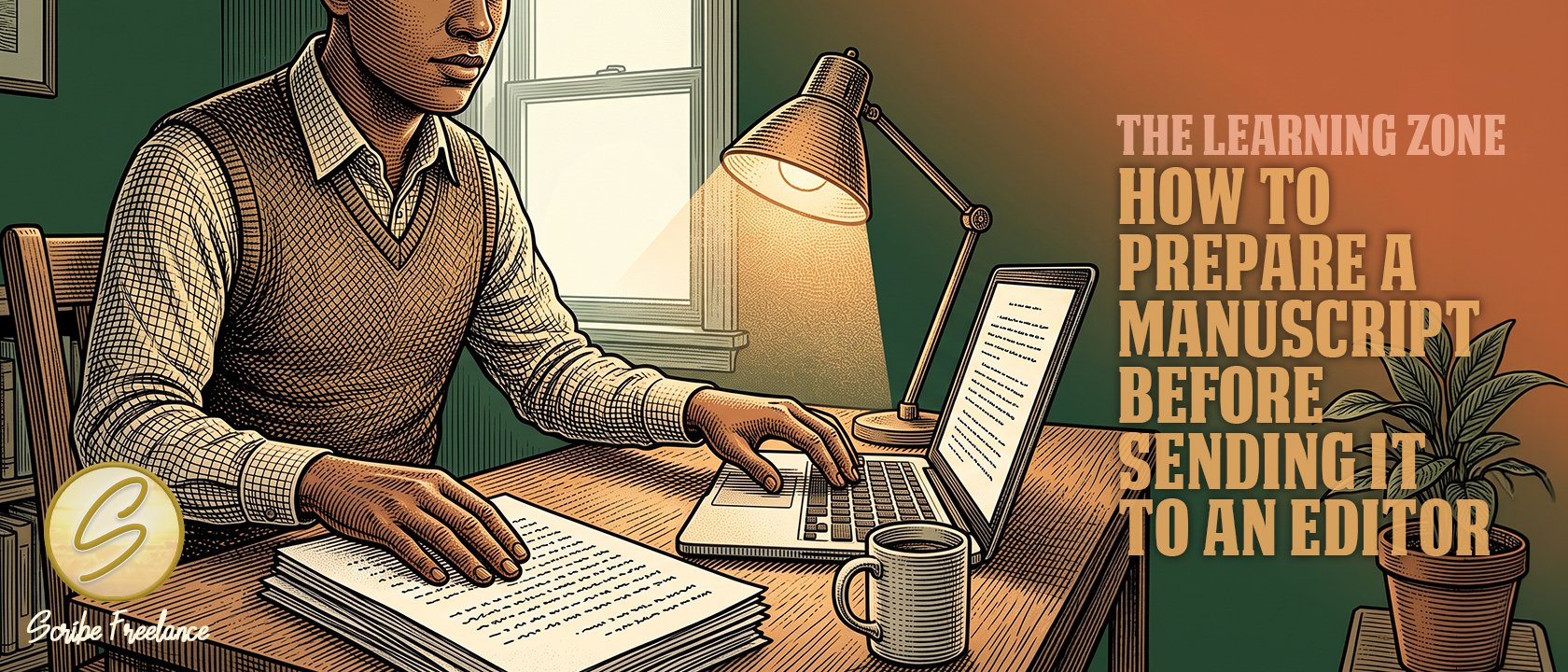
How to Prepare a Manuscript Before Sending It to an Editor
A well-written manuscript can still slow an editor down before they read a single sentence — the fix almost never has anything to do with the writing itself.
A manuscript can be genuinely well-written and still slow an editor down before they’ve read a single sentence for content — the wrong front matter order, hand-typed paragraph indents, a font that’s hard to sit with for hours. None of that is about the writing. It’s about whether the file itself is ready for an edit.
I’m Daniel J. Middleton — Scribe Freelance exists because over two decades of book design and editing work showed me how often good manuscripts get held up by process, not by the writing itself.
This piece covers what it actually takes to prepare a manuscript for editing — the organizational and formatting steps that keep an editor’s time on the writing, not the file.
What Does It Actually Mean for a Manuscript to Be Ready for an Editor?
Not the same thing as print-ready. A print-ready file is the finished, formatted book — margins set, typeface chosen, everything locked in place. A manuscript that’s ready for an editor is closer to the opposite: the industry-standard submission format, built specifically to stay open and easy to mark up.
Authors sometimes aim at the wrong target here. Making a manuscript “look like a book already” and making it genuinely editable are two different goals, and they actively work against each other — a formatted file resists the kind of tracked, in-line changes an actual edit requires.
That’s a separate question from whether a finished edit later turns out to be print-ready, which this site has covered before. This one is about what the manuscript looks like walking in the door, before any of that.
What Should You Check in a Manuscript’s Organization Before Sending It to an Editor?
A manuscript should move in a specific order, and it should already be in that order before an editor opens the file — not get sorted out mid-edit.
Front matter, then content, in the right sequence. Title page with author information first, whatever front matter material the book actually has, then the book’s content itself. A manuscript that jumps around, or arrives missing a piece of that sequence, reads as unprepared before an editor gets anywhere near the actual writing.
Chapter flow that holds together. Chapters in the order they’re meant to be read, with no gaps or leftover duplicate sections from an earlier draft. An editor shouldn’t have to reconstruct the book’s intended shape before they can start improving it.
What Formatting Mechanics Should You Fix Before an Editor Sees Your Manuscript?
Three habits cause more disruption than their size suggests, and every one of them is an easy fix once you know to look for it.
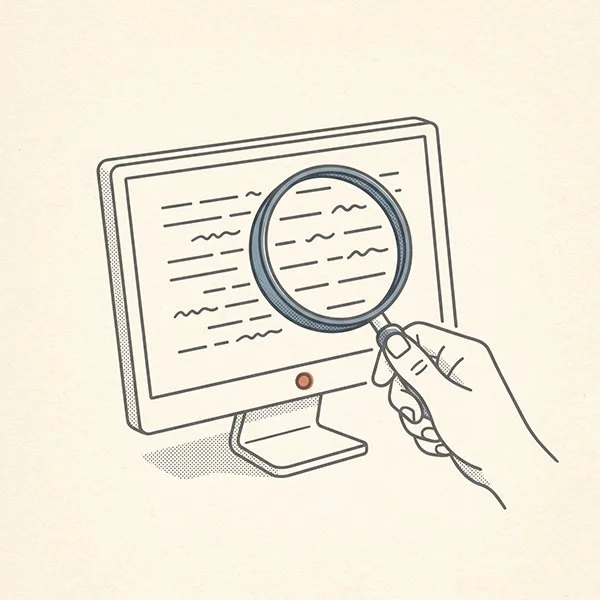
No five-spaces or a tab key for paragraph indents. A paragraph indent needs to come from an actual paragraph-style first-line indent setting, not manually typed spaces or a tab keystroke. It looks identical on screen either way — the difference only shows up once the file hits editing or layout software, where a manually typed indent breaks cleanly and a real paragraph style doesn’t. If you’re working in Word, Microsoft’s own walkthrough covers exactly how to set it up correctly.
Consistent, correct line spacing. Manuscript format calls for specific, even spacing throughout — not single-spaced dense text in one section and something looser in another. Markup and comments need room to sit next to the text they refer to, and inconsistent spacing crowds that room out.
A plain, readable font. Standard manuscript fonts exist for a reason. An editor is reading for hours at a stretch, and a decorative or unusual typeface works against them the entire time, not just on the first page.
Every one of these is invisible to you as the author, glancing at your own document. They’re the first thing an editor actually notices, before they’ve evaluated a single sentence of the writing itself.
A manuscript that’s hard to mark up isn’t being edited slower because the writing is weak — it’s being edited slower because the file itself is fighting the process.
What Happens When a Manuscript Isn’t Prepared for the Software an Editor Actually Uses?
A Canadian author sent in a manuscript without mentioning, up front, that they didn’t have access to the software our editing and formatting work actually runs on — or, as it turned out, much familiarity with it either. That gap didn’t come out until editing was already underway, once the file needed to move through steps it wasn’t built for. Because the author couldn’t work directly inside that environment, the book ended up going through the entire edit process twice — a full, avoidable round of rework.
None of that had to do with the writing itself. The manuscript was fine. The gap was entirely about a software and familiarity mismatch nobody had said out loud until it was already causing problems — and it cost real time that a heads-up before the file ever shipped would have avoided.
What Should You Do Before You Send a Manuscript to an Editor?
Run through the organization and formatting checks above before you hit send, not after a quote comes back with more hours attached than you expected. A manuscript that’s genuinely ready to edit means the whole quote goes toward the writing itself, not toward untangling the file first.
If you’re getting a manuscript ready and want a second set of eyes before you send it, the get-started page is the place to start that conversation.