

Best Practices for Giving an Editor Feedback Without Starting Over
Vague unease sends a project back to the start. Naming the exact spot keeps it moving forward.
The best feedback to give an editor is specific, organized, and well timed: name the exact spot, state the change you want, and send it before the next stage depends on it. That keeps a round of edits moving forward, where accepting everything and scrapping the round both stall.
Most authors land on one of those two extremes because vague feedback has nowhere to go. “It doesn’t sound like me” can’t be acted on, and a rubber stamp can’t be corrected later.
My name is Daniel J. Middleton, and after over two decades of editing and designing books for authors and publishers, I still start every project the same way — find out what’s actually broken before touching anything.
This piece covers what specific feedback looks like on a real project in progress, and the habits that carry over to any round of edits.
Why Do Authors Either Accept a Round of Edits Wholesale or Scrap It and Start Over?
Because neither one requires saying exactly what’s wrong. Accepting everything and rejecting everything are both easy to do without pointing at a single sentence.
The cost shows up later. A rubber-stamped round carries its problems forward, and a scrapped round throws away the changes that were working.
Part of the fix happens upstream, and this is the last of three pieces on that handoff. Settling the order that editing, layout, and proofreading happen in and keeping one current copy of the manuscript both make feedback easier to give, because everyone is looking at the same file at the same stage.
What Does Specific Feedback Look Like on a Real Layout Project?
Corey Anton’s On Reading, an Institute of General Semantics book, is in layout with me right now. It’s a layout project, not an edit, but the feedback loop has the same moving parts.
He handed me a polished file to start, so there was no heavy triage. He describes himself as a perfectionist, and he came back with several rounds of specific edits.
What Is an Errata Process, and How Does It Keep a Round of Corrections From Derailing a File?
An errata process is a structured way to submit corrections after a file has gone out for review. I walked Corey through it so his changes arrived as an organized list instead of scattered notes.
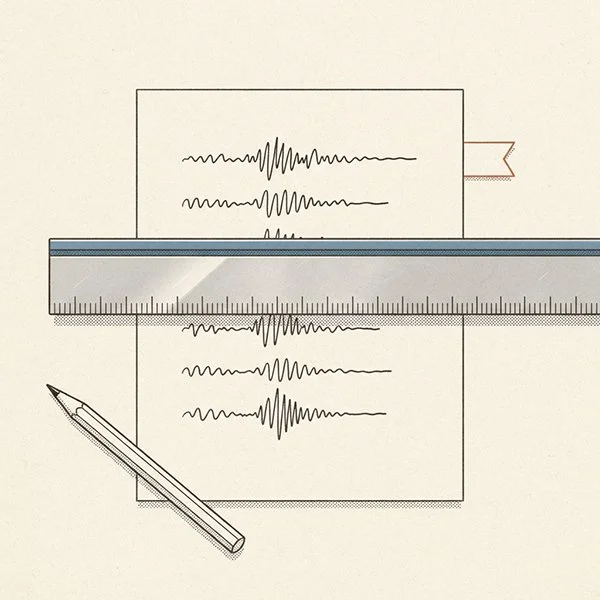
Each entry gives the page number, the paragraph number (counted from the top or the bottom, with the direction stated), the line number within that paragraph, and the exact text before and after. It’s one entry per line, grouped in page order on longer lists.
That leaves nothing to interpret: a location and a change. It also gives the author a record of what he asked for, which makes the next proof easier to check.
The same structure works for feedback on an edit: where it is, what it says now, and what you want it to say.
How Did a Question About Indexing Lead to a Better Layout Workflow?
Corey asked when indexing should start. I told him to get all remaining changes in first, since an index points to page numbers and later changes can move them.
Then he came back with a solution of his own. The front-matter blurbs were still pending, and that open front matter was holding up the index. He proposed renumbering the intro to page 1, so index work could begin on the main book block while the front matter stayed open.
It’s a good example of feedback at its most useful: a real question, a clear answer, and a workable idea from the author in return.
Why Does the Feedback Between an Author and the Person Doing the Work Run Both Ways?
Because the author knows the vision, and the person doing the work knows the constraints. On this project, my answers shaped Corey’s decisions, and his ideas shaped my workflow.
The cover ran the same way. Corey gave me detailed instruction on how the front cover’s mock text should represent the artwork, to match his vision exactly. I didn’t have to guess, and he didn’t have to sit through round after round of guesses.
So far, that has produced a happy, re-energized client who’s watching his vision come together. That energy wasn’t there at the start.
Good feedback gives whoever is doing the work three things to act on: where the problem sits, what should replace it, and whether the schedule can still absorb the change.
What Should You Bring When Giving Your Editor Feedback on the Next Round of Edits?
Bring a question or a proposed fix, not just a reaction. If something feels off, find the page and the line, and say exactly how you want it to read instead.
If a change could affect something further down the line, like an index or a layout, ask about timing before the changes go in, not after.
If you’re lining up an editor, my current service rates lay out each editing tier, so you can plan your rounds of feedback alongside the budget.