

Why Does Editing Take Longer Than the Estimate I Was Given?
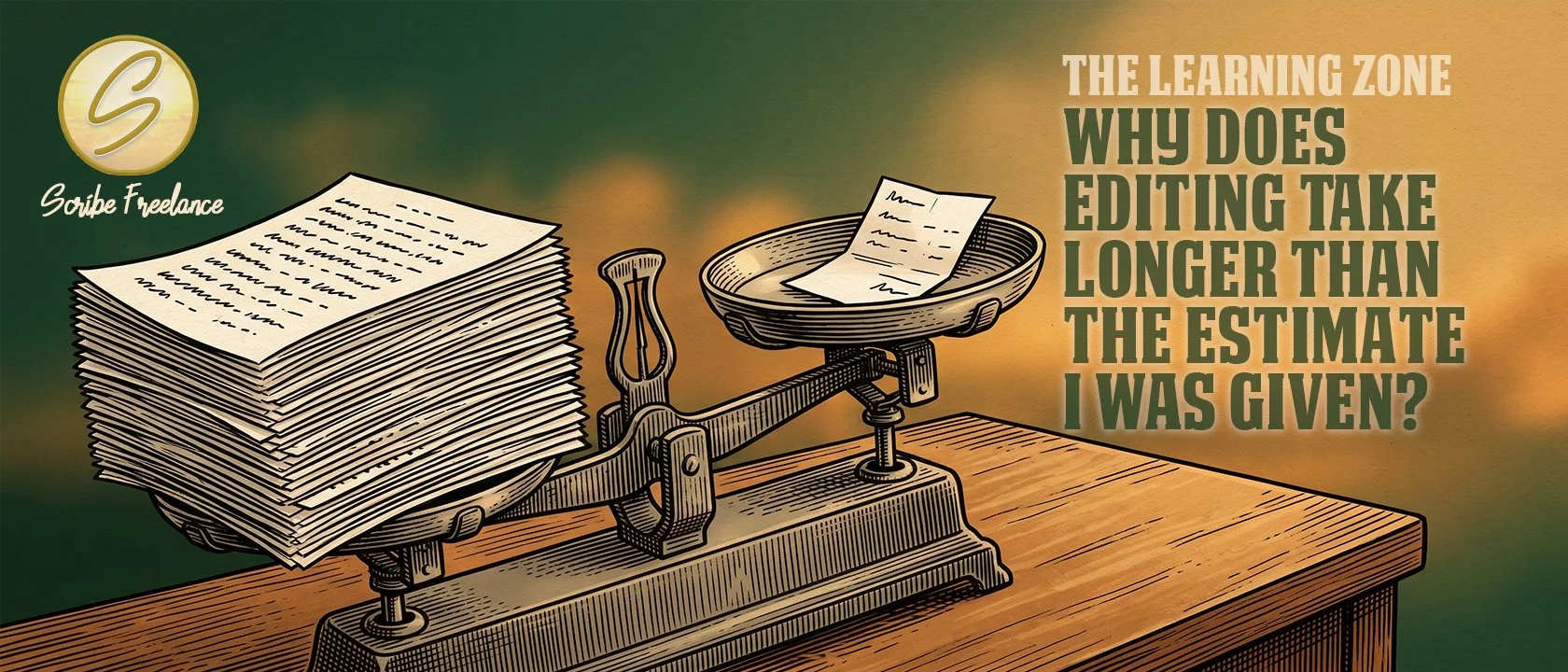
A flat quote can’t see how dense your manuscript actually is — not until someone’s inside the file weighing it page by page.
You got a flat per-word quote for a light proofread, and now you’re weeks past the deadline with no end in sight. The estimate wasn’t wrong because someone miscalculated — it was wrong because it assumed a manuscript that matched the tier it was quoted at, and yours didn’t.
My name is Daniel J. Middleton, and after over two decades of editing and designing books for authors and publishers, I still start every project the same way — find out what’s actually broken before touching anything.
This article isn’t about bad estimating. It’s about what a flat editing rate actually assumes, and why that assumption can hold perfectly on one manuscript and fall apart on another.
Why Do Flat Editing Estimates Assume an Average Manuscript?
A per-word or per-page rate has to assume something about the manuscript underneath it. It assumes a certain ratio of genuine correction to simple verification — how much of the work is fixing real problems versus confirming a page is already clean.
That ratio is an average. Averages hold up fine across a large enough sample of projects. They don’t hold up on any single manuscript, because a single manuscript is either denser than average or smoother than average — rarely exactly average.
What Does “Manuscript Density” Actually Mean?
Density isn’t about word count. It’s about how much genuine correction a given passage needs versus how much simply gets checked and left alone.
A dense manuscript breaks house conventions repeatedly — inconsistent punctuation, phrasing that doesn’t match Chicago style, measurements that shift format from chapter to chapter. Each of those has to be caught, fixed, and cross-checked against the rest of the file. A light manuscript already does most of that correctly, so the editor is mostly confirming, not correcting.
An editing estimate isn’t really a guess about how long editing takes — it’s a guess about how clean your manuscript already is.
What Happens When a Manuscript Doesn’t Match the Tier It Was Quoted At?
I once came onto a project as a proofreader, following an editor who’d already been through the manuscript. The book wasn’t actually in proofreading shape — it broke Chicago Manual of Style conventions repeatedly, in phrasing, punctuation, and measurement consistency.
A proofread-tier estimate assumes a manuscript that’s already clean at the sentence level. This one wasn’t, and the work it actually needed went well past that scope. The estimate wasn’t wrong because of bad math. It was wrong because the manuscript’s condition didn’t match the tier it had been quoted at.
What Does It Look Like When an Estimate Holds Up?
A different project — a ghostwritten manuscript, currently in progress for me as a light proofread — makes the opposite point. The writing is smooth and consistent, among the cleanest projects I’ve worked on. I even recognized some of the writer’s recurring phrasing and small errors from an earlier project with the same byline, which made the density visible before I was far into the file.
The publisher requested a light proofread, and the manuscript genuinely warrants exactly that. The estimate is holding here — not because the deadline pressure disappeared, but because the manuscript’s actual density matches what a light-proofread estimate assumes.
What Should You Expect When You Get an Editing Quote?
Two projects, two outcomes, and the difference isn’t which editor was more careful. It’s whether the manuscript’s real condition matched the tier it was priced at — something that’s genuinely invisible from word count alone.
That has a practical consequence for you as the author getting a quote:
A wide range in an estimate isn’t evasiveness. It’s honesty about a variable — your manuscript’s actual density — that can’t be known until someone is inside the file.
A “confirm after initial review” clause protects you too. It means the quote gets adjusted to match reality instead of an editor quietly absorbing hours they didn’t plan for, or rushing a pass to stay on budget.
If you already suspect your manuscript is denser than your last book, or than what you’ve seen from other authors, mention it up front. It won’t make the estimate more precise on its own, but it tells your editor where to look first.
What Should You Do If Your Editing Is Already Running Long?
If you’re past the estimate and wondering whether something went wrong, the first question isn’t about the timeline. It’s about what the editor is actually finding — genuine correction, or verification that happens to take time because there’s a lot of manuscript to get through.
If your manuscript turns out denser than the tier you booked, that’s worth a direct conversation with your editor about whether you’re still in the right tier at all, not just whether the clock needs to move. The service rates page breaks down what each editing tier actually covers, which is a useful starting point before that conversation.