
Is a Clean Edit the Same Thing as a Print-Ready Manuscript?
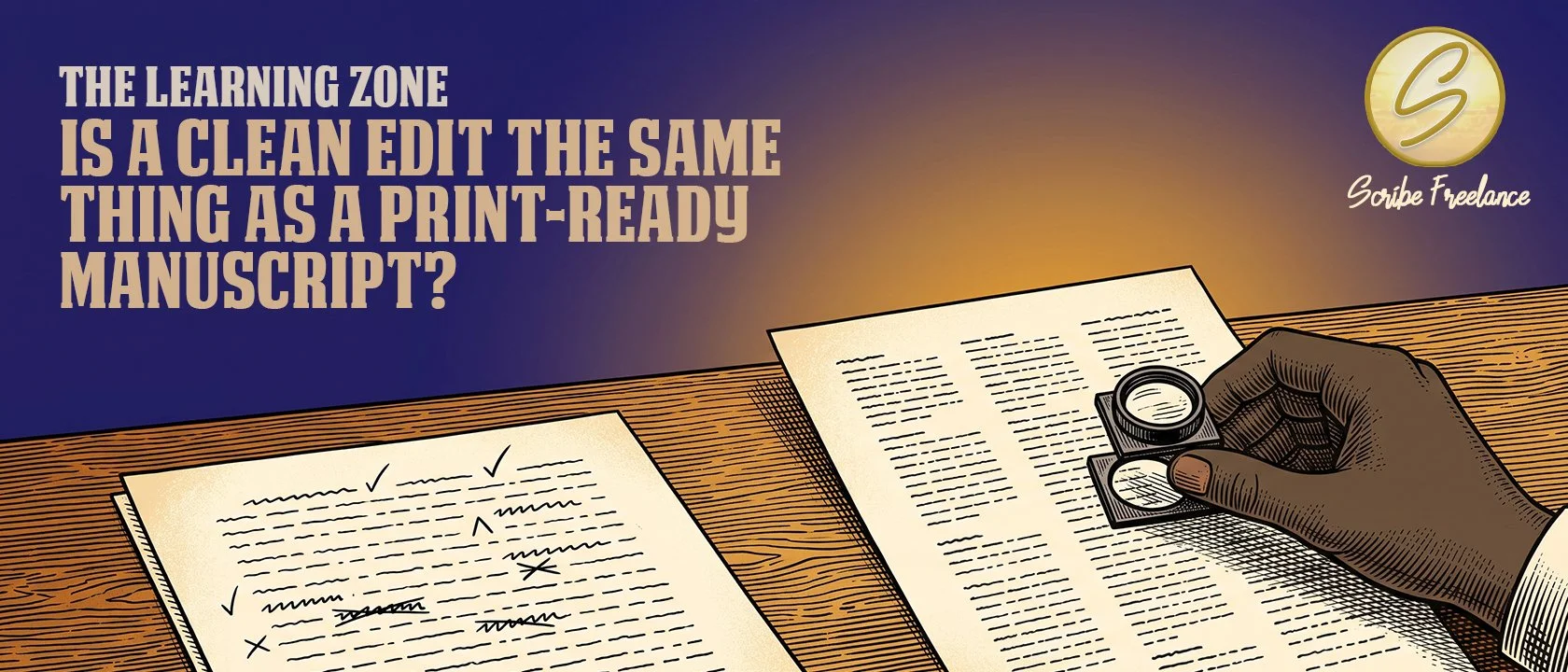
A finished edit and a print-ready file check different things. Finding something at the second stage doesn’t undo the work of the first.
Your edit comes back clean, every note addressed. Then a few weeks later, during indexing or layout, something turns up, and your first instinct is that the edit missed it. Maybe it didn’t, because a clean edit and a print-ready file are two different checkpoints, not two names for the same status.
During the ARC (Advance Reader Copy) review for Stay Thirsty, a memoir I edited and formatted for the author, Mark Haertzen, real issues surfaced during indexing — after my edit was already finished. None of it traced back to the edit itself; indexing catches things a clean edit was never scoped to catch. My name is Daniel J. Middleton — I started Scribe Freelance because I wanted indie authors and publishers to have the same design quality the big houses take for granted.
Here’s what a clean edit actually covers, what it doesn’t, and why finding something later isn’t proof your editor dropped the ball.
What Does a Clean Edit Actually Cover?
A clean edit is a writing-level pass. It’s built to fix the manuscript itself, not the file it eventually becomes:
Prose-level accuracy. Grammar, punctuation, word choice, and consistency from one chapter to the next.
Structural and stylistic coherence. Whether the voice holds up, the pacing works, and the piece reads as a whole rather than a stack of separate sections.
Line-level clarity. Cutting clutter, tightening phrasing, and catching contradictions sitting inside the text itself.
That’s the full scope. If the notes you’re getting are about the writing, that’s exactly what a clean edit is built to fix. Whether that’s the tier your manuscript actually needed in the first place is a separate question — how to choose the right editing level covers that decision directly.
What Turns an Edited Manuscript Into a Print-Ready File?
An edited manuscript is one checkpoint on the way to print-ready — not the finish line. Once the writing is locked, the file still has to pass through a separate set of checks that have nothing to do with the prose:
Indexing accuracy. Cross-references and page numbers only exist to check once the pages are actually set.
Layout-affecting details. How a heading break lands, how spacing reads once the type is placed on the page.
File-level specs. The platform rules that decide whether a print-ready file gets accepted in the first place.
A clean edit settles the words. Print-readiness settles everything those words sit inside of — and neither one substitutes for the other.
Why Did Something Turn Up During Indexing After My Edit Was Already Done?
By the time Mark’s manuscript reached indexing, the edit was long finished. That’s where he flagged something while reviewing the index: mislabeled entries, prologue page references that didn’t match the final layout, and formatting that made certain names and page numbers look connected when they weren’t.
None of it was a miss on the edit. It surfaced because indexing is its own review pass, checking cross-reference accuracy and page-number consistency that simply don’t exist to check until type is actually set. I worked through the correction with Mark directly and coordinated with Rose, the indexer, before anything got implemented, since the index was already laid out and unnecessary changes risked text-wrap and page-count problems.
That’s a different situation from a formatted book coming back with typos an editor missed, where the usual cause is a file-handoff problem — the wrong draft reaching formatting, not a fully accepted edit. Both look like “I found something after my edit,” but they point to different fixes, so it’s worth knowing which one you’re actually looking at.
What Should You Expect After the Edit Comes Back?
Expect more checkpoints after “edited,” not because the edit was weak, but because a book has more than one kind of accuracy to verify before it’s genuinely print-ready. If something surfaces during indexing or layout, that’s the process doing exactly what it’s supposed to do.
And if you’re not sure your manuscript went through the right tier of editing to begin with, the service rates page breaks down what each tier actually covers.