
How to Budget for Editing Alongside Design and Formatting Costs
Three separate bills can feel like three separate surprises. One itemized quote turns them into a single, plannable number.
Authors often price out a cover and an interior layout first, since those costs feel concrete, and treat editing as an afterthought — or they do it in reverse, and the design and formatting bill shows up as its own surprise. The real fix is one number covering editing, design, and formatting together, instead of pricing each piece separately as it comes up.
I’m Daniel J. Middleton, and my editing work goes back to 2002, when a Brooklyn-based press first hired me to proofread a novel — over two decades of learning exactly where a manuscript still needs work before it’s ready for readers.
This piece uses a real bundled quote from a past project as the model.
Why Do Editing Costs Blindside Authors Who Already Budgeted for Design and Formatting?
A cover is something you can look at. A formatted interior is a file you can hold and flip through. Editing is neither — it’s harder to picture in advance, so it’s easy to treat as an afterthought until an editor is already reading the manuscript.
That ordering runs in reverse just as often. An author locks in an editing quote first, gets to work with the manuscript, and only later starts pricing out a cover and layout — at which point that second number lands as its own surprise, on top of a budget that already felt settled.
Neither direction is really about which service costs more. It’s about only ever seeing one piece of the number at a time.
What Did a Real Bundled Quote for Editing, a Cover, and Interior Layout Look Like?
Keith Sodan’s memoir, Greatness Is a Verb, is a real example of the alternative. The quote I sent his publisher, John Clark, wasn’t three separate conversations spread across different weeks — it was one email, with three line items sitting next to each other: a proofread, a cover in the Graphic Design tier, and a complex interior layout.
John saw the whole project cost as a single number before any of the three pieces of work actually started, rather than three bills arriving at three different stages of production. That quote broke down as roughly $1,380 for the proofread, $525 for the Graphic Design tier cover, and $872 for the complex layout. Ebook formatting came later, added to the stack once that initial bundle was already approved — a separate line item, not something bundled in from the start.
Those figures reflect the rate structure I was billing under at the time, not what I charge now — the bundling is the real lesson here, not the specific numbers. My current service rates page has what those three pieces actually cost today.
What Happens When Even a Deliberate Quote Misses a Line Item?
Bundling a quote doesn’t make it foolproof on its own — it still has to be built with the full scope in mind. On a project for Charles Enea, The Inheritance of Shadows, I initially left the ebook formatting cost out of the phone-quote conversation entirely. I had to circle back afterward with a corrected total once I caught the gap.
It’s a small, honest example of the same discipline this piece is asking authors to bring to their own budgeting. Even someone actively trying to hand over the full number up front can still miss a piece if the scope isn’t checked line by line before it goes out.
The safest budget is the one built from a single itemized quote, checked all the way through before it’s ever sent.
How Should You Actually Build or Request a Combined Quote?
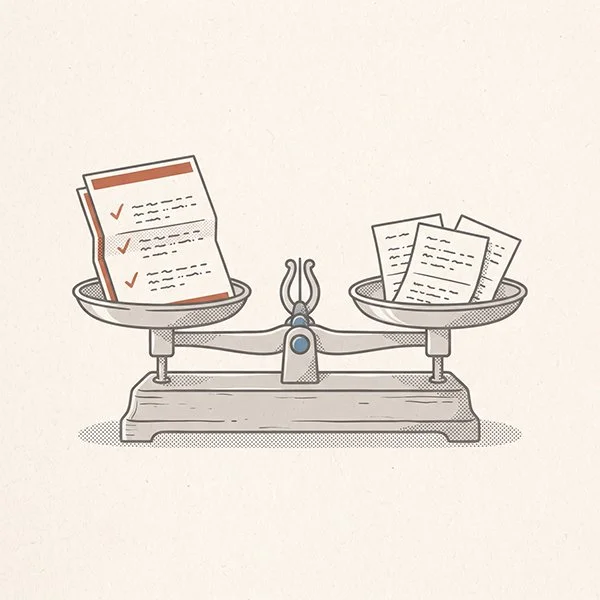
If a broker or a shop like Scribe Freelance is handling the project, ask directly for one itemized quote covering editing, the cover, and the interior together — not three separate estimates delivered whenever each service happens to get scheduled.
If you’re self-publishing without a broker and lining up vendors on your own, the same principle still applies. Get every quote in hand — editing, cover, interior, ebook formatting if it applies — before treating any single number as final, rather than committing to a budget off of whichever quote happened to arrive first.
Either way, the goal is the same one Greatness Is a Verb got by accident of good process: one number, seen whole, before the work begins.
The next time you request a quote for your own book, ask for all the pieces that apply in the same conversation. If you’d rather see what a combined quote actually looks like for your specific manuscript, the service rates page breaks down current pricing for editing, covers, interior layout, and ebook formatting side by side.
Budgeting is the last piece of a longer arc — knowing what level of editing your manuscript needs, preparing it, reviewing the changes, moving it into a formatted file, handling revisions, and coordinating an editor and a formatter as two separate vendors all come before this. If any of those steps are still ahead of you, the rest of that arc is in the Learning Zone.