
Red Flags That Signal an Editing Service Is Cutting Corners
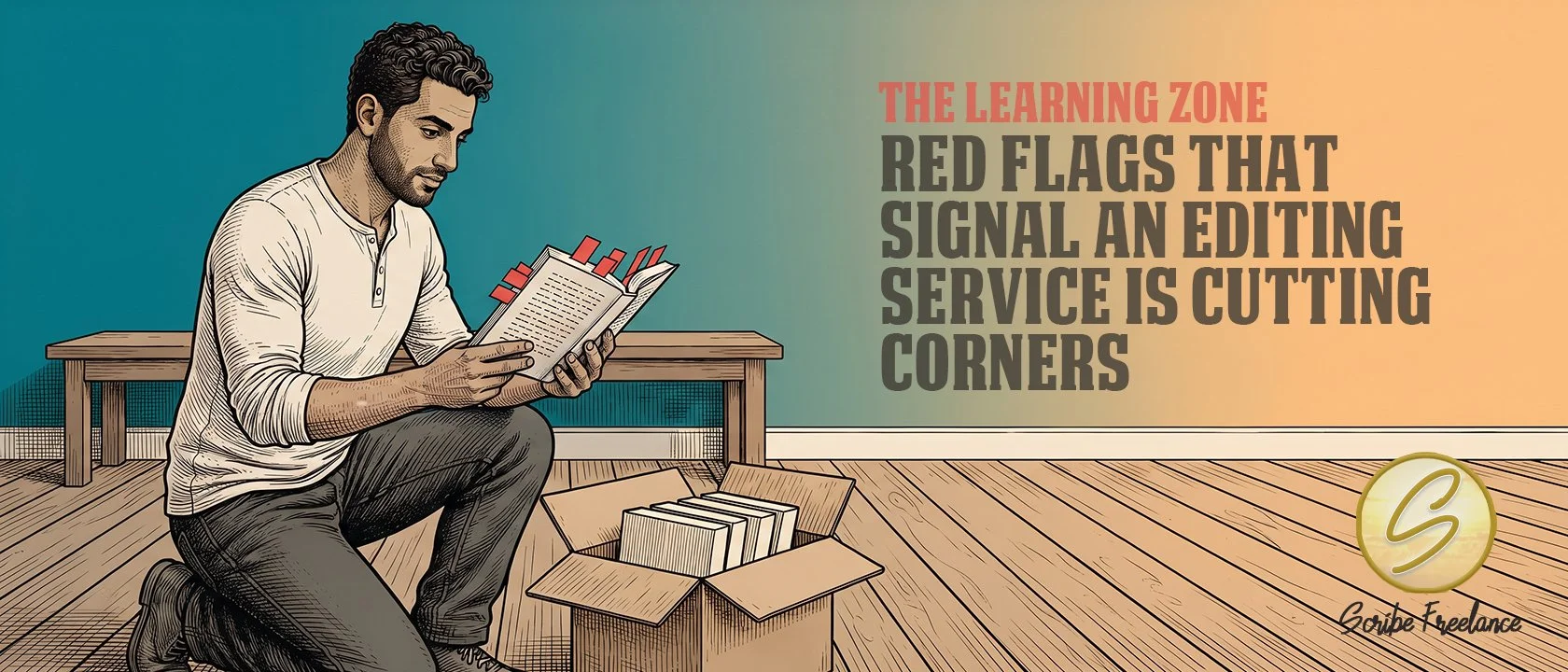
A fast, cheap edit can look like a bargain until the flags show up. Reading your own pages first shows what the work covered.
The clearest red flag that an editing service has cut corners is a high volume of typos in a book that was supposedly edited or proofread. A fast turnaround and a low price can look like a deal right up until those typos show up in the finished book.
I’m Daniel J. Middleton, and over two decades in book design and editing is enough time to run into just about every production hiccup there is — and to know the fix.
This piece covers the typo tell, the nuance that keeps it fair to a narrowly scoped edit, and the other signs worth checking on the page.
Why Are a Lot of Typos in an Edited Book the Clearest Red Flag?
Because a real edit leaves very few behind. I don’t mean one stray typo here and there. I mean a volume of them that shouldn’t have survived any real editing pass by an “editor” or a “proofreader.”
That’s also the easiest tell to check. You don’t need to know how the service works, only what’s on the page.
When Can a Legitimate Edit Still Leave Typos Behind?
When the edit was scoped to something else. A fact-checking edit or a structural edit isn’t supposed to catch every typo, so typos left in its wake aren’t a failure on the editor’s part.
That’s why editing runs in rounds. Each round catches problems at a different level, and no single round is meant to catch everything. It’s also why typos can still turn up in a formatted book after a professional edit.
So before you judge an edit, ask what it was meant to cover. Typos left by a fact-check or a structural edit are a reason to book a copy edit or proofread. Typos left by an edit or proofread that was supposed to catch them are the red flag.
What Other Signs Show an Editing Service Rushed the Job?
Typos aren’t the only tell. Four more show up on the finished page:
Weak sentence structure. Sentences that still wander or bury the point after an edit that should have fixed them.
Poor phrasing. Wording that’s awkward on the page, the kind a real line edit would have smoothed.
Factual inaccuracies. Names, dates, or claims that are wrong and were left standing.
Outdated terminology. Terms the language has moved past, left uncorrected.
I’ve reviewed other editors’ finished work over the years, and I’ve seen them all.
A finished-looking file doesn’t guarantee a finished edit, either. One real manuscript that looked ready for layout and wasn’t shows how little the surface can tell you.
A corner-cutting edit is one that missed what its own scope should have caught, not one that simply left problems outside that scope.
What Should You Check Before You Assume an Edit Is Finished?
Read a sample of your own finished pages against the list above before you assume the edit is done. Count the typos, note any sentences that don’t land, and check the facts and terms you know well.
If the typo count is high, ask the service what the editing pass covered before you decide whether it fell short.
If you’re comparing editing services, my current service rates show what each tier covers and costs, so you can match the editing pass to the problem.