
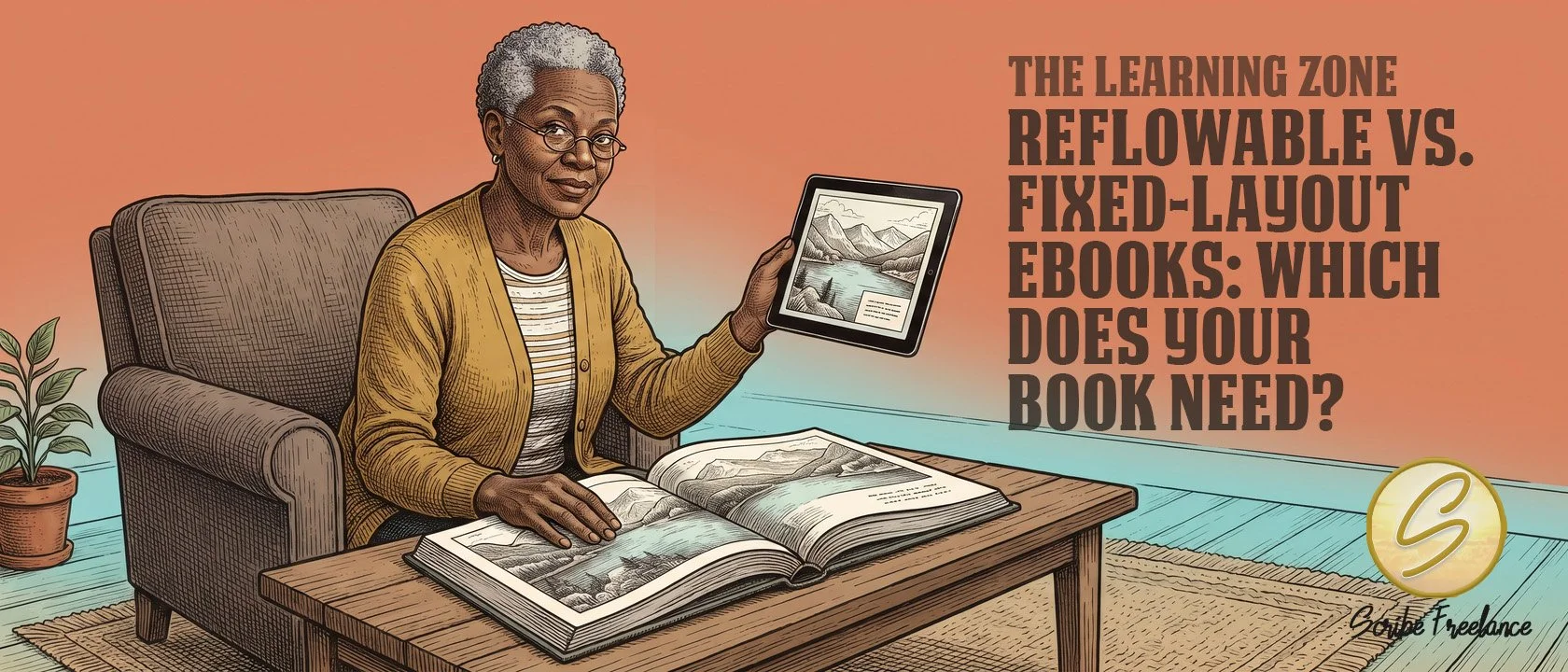
A coffee table book’s spread only works exactly as it was designed. Most books aren’t built that way, and their ebooks shouldn’t be either.
Most books need a reflowable ebook, including text-heavy books with a few images scattered through them. A fixed-layout ebook is for the narrow set of books that have to work like a PDF, where large images and carefully placed text only make sense exactly as designed.
Pick the wrong one and the reading experience breaks either way: a novel locked into fixed pages that readers have to pinch and zoom, or a photo book whose captions drift away from their pictures.
My name is Daniel J. Middleton, and after close to two decades in book design, the mistakes I see most often aren’t about talent — they’re about a process nobody explained.
This piece covers what separates reflowable from fixed-layout ebooks, why reflowable suits most books, the one kind of book that really needs fixed layout, and a quick way to tell which camp yours is in.
What’s the Difference Between a Reflowable and a Fixed-Layout Ebook?
A reflowable ebook has no fixed pages. The text rewraps to fit whatever screen it’s on and whatever font size the reader picks, so a page on a phone holds less than a page on a tablet.
That’s possible because an EPUB is structured text plus styling rules, not a picture of a page. If that’s new to you, here’s what actually goes into an EPUB file.
A fixed-layout ebook works the other way. Every page is set like a print page, with each image and line of text locked in place, and the reader sees the whole page at once, scaled to the screen.
Why Do Most Books Work Better as Reflowable Ebooks?
Reflowable is built around the reader. They can change the font and its size, look up a word, highlight a passage, or have a screen reader read it aloud, and the book adapts on every device.
KDP’s own comparison of ebook formats recommends reflowable for text-heavy titles and lists it as supported on all Kindle devices and apps. That reach matters, since an ebook can look wrong on some Kindle devices even when it’s reflowable.
Images don’t change that. A memoir with family photos, a cookbook with a picture per recipe, or a business book with a few charts can all flow, each image sitting between paragraphs where it belongs.
When Does a Book Actually Need a Fixed-Layout Ebook?
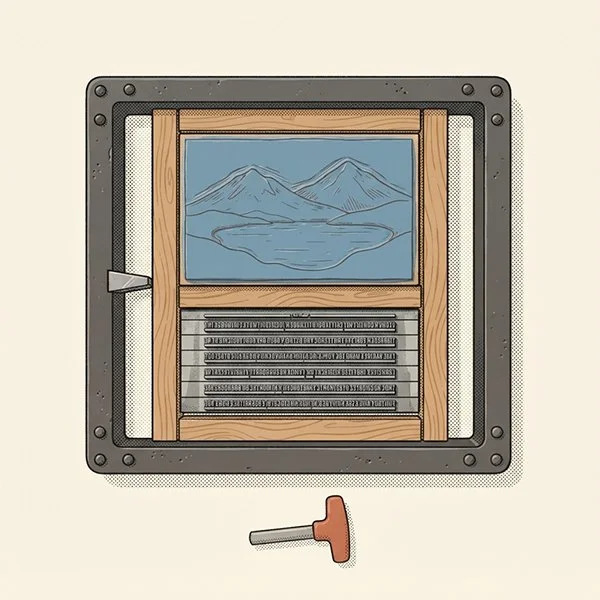
Fixed layout earns its place when the design is the content. The clearest case I’ve seen is the coffee table book.
Clients who published coffee table books had to go fixed-layout, because reflowable couldn’t keep the painstaking design work of the print edition. Those pages pair large images with a few lines of carefully placed caption text, and a reflowable ebook can’t guarantee that either one lands where it was designed to go.
KDP points the same way. Its format comparison lists coffee table books and children’s picture books as fixed-layout candidates, and it says its Print Replica format should be used only when content “absolutely requires” the exact print layout.
What Does a Fixed-Layout Ebook Give Up on Kindle?
That locked design costs the reader features. KDP’s format comparison lists these limits:
No user font settings: readers can’t enlarge the text, so small type stays small.
No text selection or dictionary: on the pop-up formats, readers can’t select a word, look it up, or highlight it.
No screen reader support: listed for several fixed formats, which shuts out readers who rely on one.
Fewer devices: some fixed formats work on Kindle e-readers only case by case, and Print Replica doesn’t work on e-readers at all.
File size is the other cost. Big, full-page images make big files, and on KDP’s 70% royalty option, delivery costs come out of each sale and vary by file size.
A book needs fixed layout only when its pages are the design, and a book that merely contains pictures is better served by letting the text flow.
How Can You Tell Whether Your Book Needs Reflowable or Fixed Layout?
Ask whether your book’s design depends on exact placement, or whether it just contains images. Only the first one needs fixed layout.
Does the meaning depend on where things sit? If a caption only works beside its picture, or text is set over or around an image, that points to fixed layout.
Is most of each page an image? Large, full-page art with little text, like a coffee table book or a picture book, points to fixed layout.
Would the book still make sense read top to bottom? If the images can sit between paragraphs without losing anything, it’s a reflowable book.
Is the text long enough that readers will want to resize it? Novels, memoirs, and most nonfiction need reflowable for that alone.
KDP updates its formats and supported devices from time to time, so check its current comparison before you build.
What Should You Decide Before Formatting a Reflowable or Fixed-Layout Ebook?
Settle the format before the file gets built, since the two are built differently from the first page. Look at your print edition and decide whether its layout is the point, or just the frame around the words.
If you’re not sure which camp your book falls into, the get-started page is a good place to talk it through.